

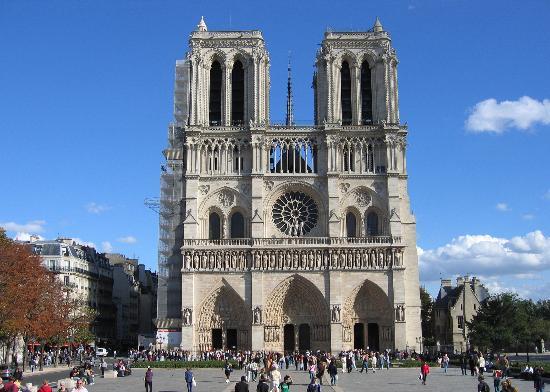
Paris’ most visited un-ticketed site, with upwards of 14 million visitors per year, is a masterpiece of French Gothic architecture. The focus of Catholic Paris for seven centuries, its vast interior accommodates 6000 worshipers.
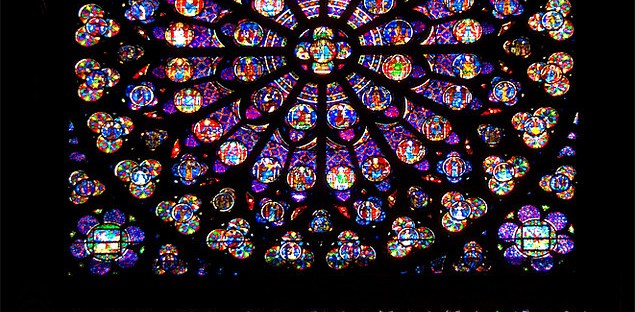
Highlights include its three spectacular rose windows, treasury and bell towers, which can be climbed. From the North Tower, 422 steps spiral to the top of the western façade, where you’ll find yourself face-to-face with frightening gargoyles and a spectacular view of Paris.

Inside, the central choir, with its carved wooden stalls and statues representing the Passion of the Christ, is noteworthy. The trésor(treasury) in the southeastern transept contains artwork, liturgical objects and first-class relics; the admission fee includes a handy audio-guide. Among the treasures stashed here is the Ste-Couronne, the ‘Holy Crown’, which is purportedly the wreath of thorns placed on Jesus’ head before he was crucified, brought here in the mid-13th century. It’s exhibited between 3pm and 4pm on the first Friday of each month, 3pm to 4pm every Friday during Lent, and 10am to 5pm on Good Friday.

One of the best views of the cathedral is from square Jean XXIII, the little park behind the cathedral, where you can better appreciate the forest of ornate flying buttresses that encircle the chancel and support its walls and roof. Don’t miss the line-up of bells in the garden here: in 2013, to celebrate the 850th anniversary of construction beginning on Notre Dame, the cathedral was kitted out with nine new bells to compliment the original, 13-tonne bell Emmanuel (as tradition demands, cathedral bells are named).

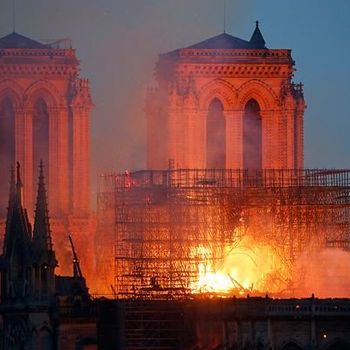
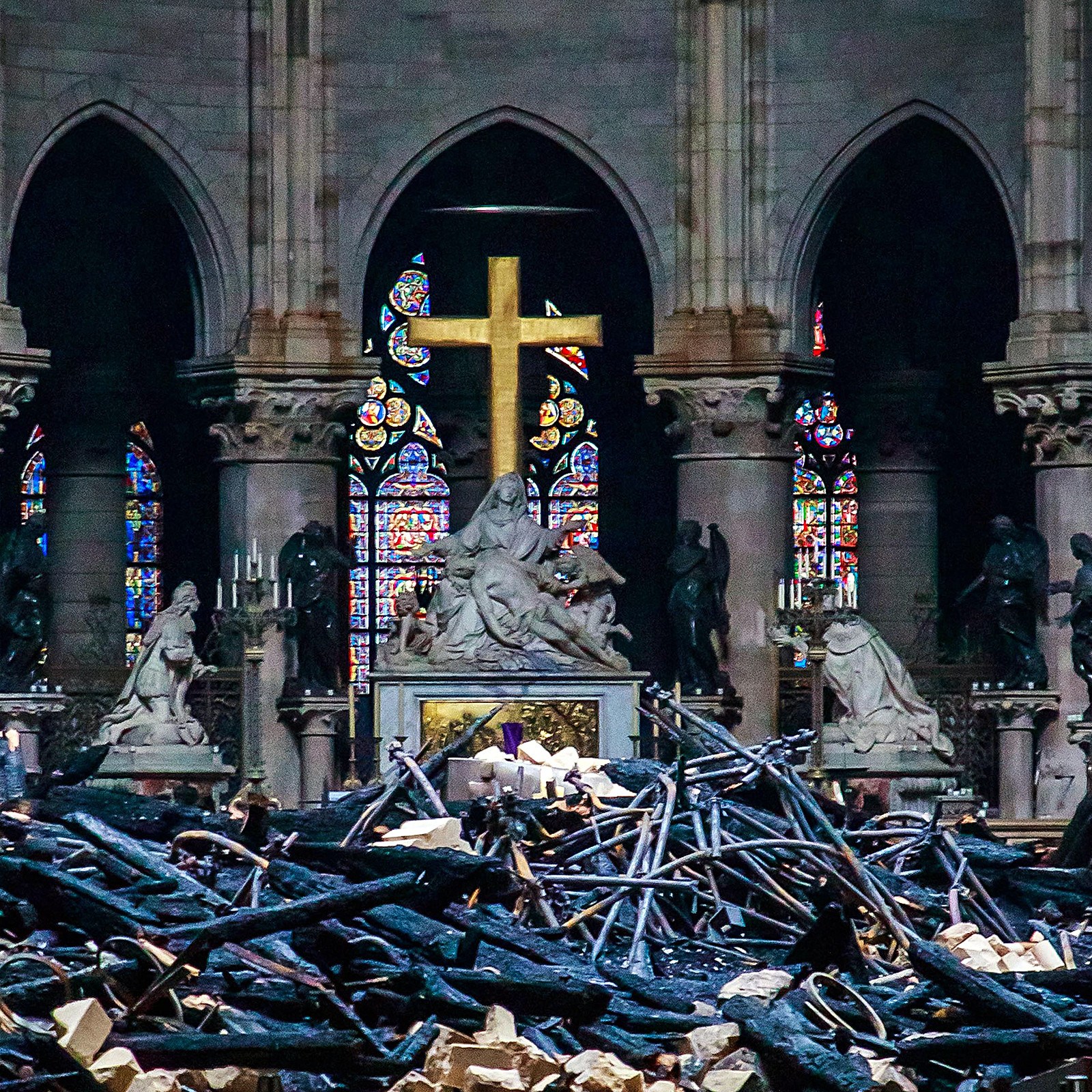
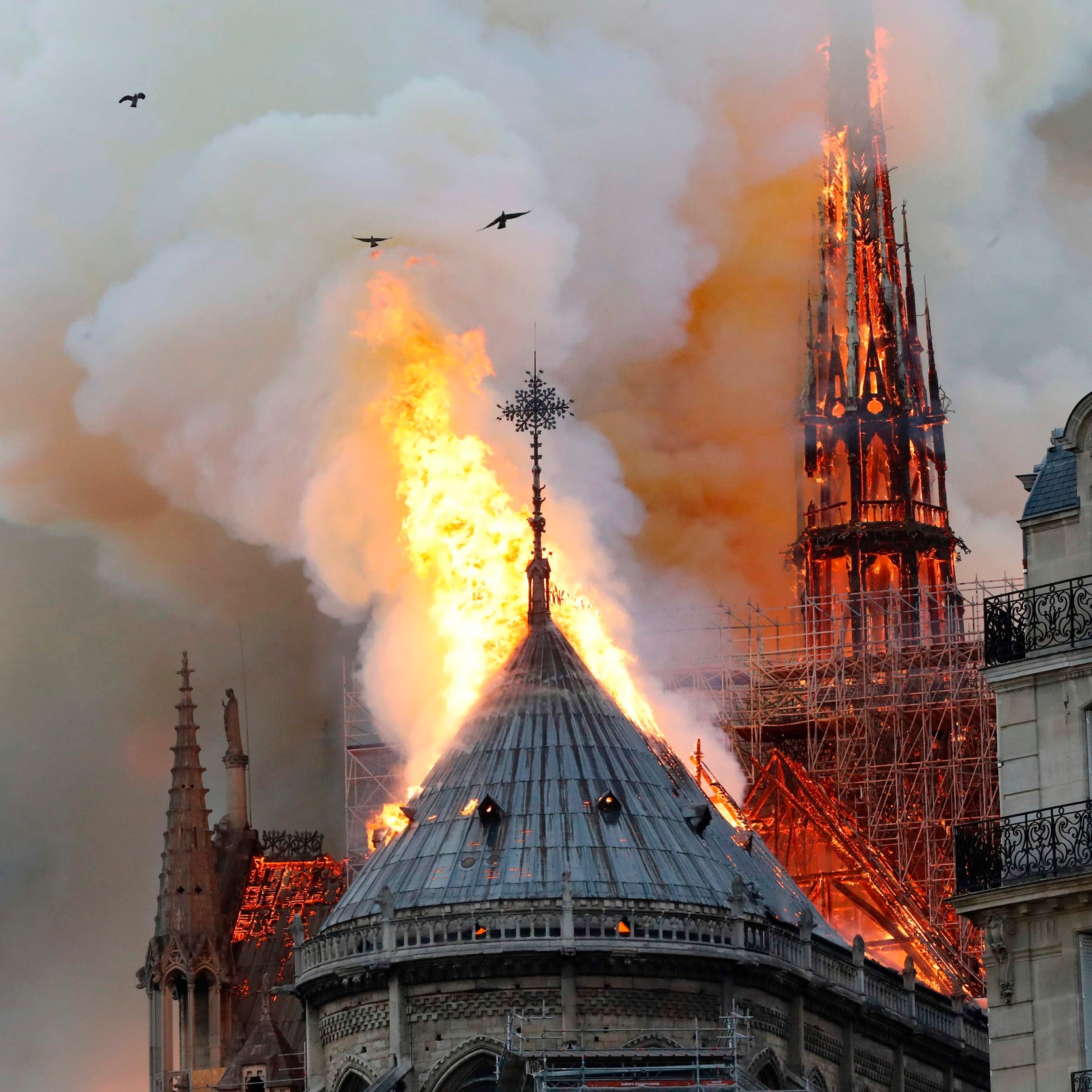
On 15 April 2019, just before 18:50, a fire broke out beneath the roof of Notre-Dame Cathedral, Paris. By the time it was extinguished 15 hours later, the building’s spire and most of its roof had been destroyed and its upper walls had been severely damaged; extensive damage to the interior was prevented by its stone vaulted ceiling, which largely contained the burning roof as it collapsed. Many works of art and other treasures were evacuated early in the emergency, but many others were damaged or destroyed. The cathedral’s two pipe organs, and its three 13th-century rose windows, suffered little or no damage. Three people were injured.

 Meraki